The Recipe Learner
Tools
-
HTML
-
CSS
-
Typescript
-
React
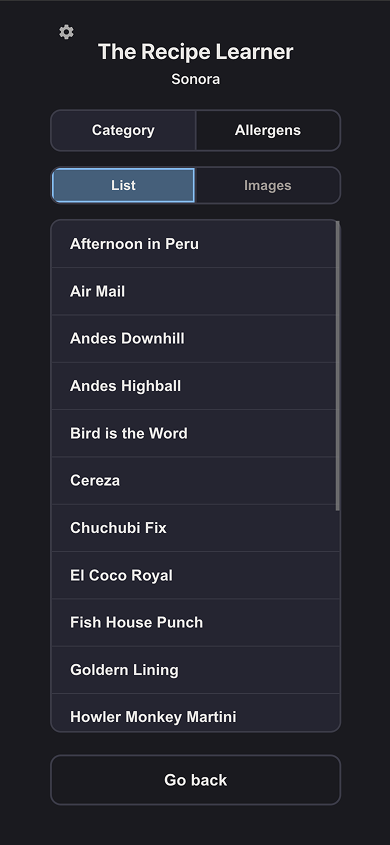
The Recipe Learner started as a simple React application for the cocktail team at Sonora Cocktailbar. The goal was to help staff learn their cocktail recipes through practice, rather than simply reading a recipe and trying to memorise it. The learning experience is built around trial and error. Staff are presented with a recipe and have to actively recall the ingredients, quantities and preparation methods. This turns recipe learning into an interactive process rather than a passive reference tool. After seeing the value of the system at the cocktail bar, I expanded the concept to other parts of the hotel. The restaurant bar was given its own version for learning its recipes, followed by a version designed specifically for restaurant servers. Finally, I adapted the platform for another bar within the hotel. Because each workplace has different recipes and different needs, the application was designed as a multi-location system. Managers can log into their own environment and manage the content themselves through an administration panel. They can add and edit recipes, upload images, add allergens and provide the information staff need to learn their menu. The result is a self-sufficient training platform that can be maintained by the people using it, without requiring a developer to add or update recipes. The Recipe Learner is now actively used by staff, including as a learning tool for new employees joining the different teams.
Project information
The starting point
The idea came from my own experience working in fine dining. Before I had the programming skills I have today, I had to learn an entire menu by heart: how every dish was prepared, which ingredients were used, how everything tasted, and which allergens were present. It was a lot of information to memorise, and I started wondering whether there was a better way to learn it. During my thesis project, PrepStep, I worked closely with different outlets at nhow Amsterdam RAI. That brought me back to this earlier experience and inspired me to explore the idea as a side project: a digital learning tool that could help hospitality employees prepare for their work with more confidence.
Starting with cocktails
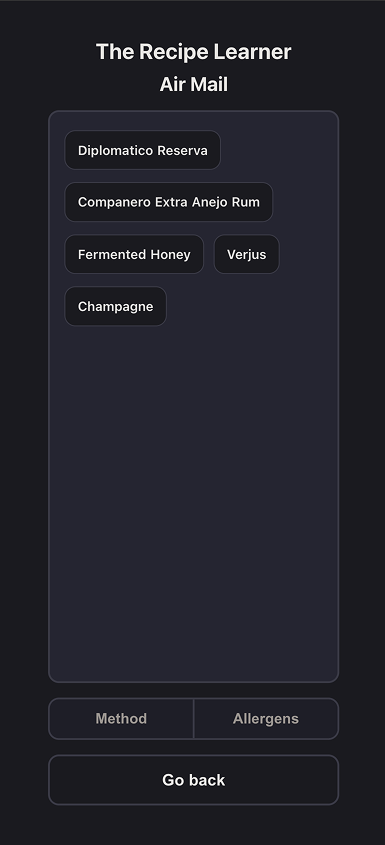
I began with the cocktail bar, where I developed a playful way for bartenders to learn the ingredients of their cocktails. The learning process starts by showing the complete list of ingredients. With each round, one more ingredient disappears, challenging the user to recall the missing information from memory. The process continues until the bartender can identify all the ingredients without any hints. By gradually removing the information, the application encourages users to actively recall what they have learned instead of simply rereading a recipe.
Adapting to different learning styles
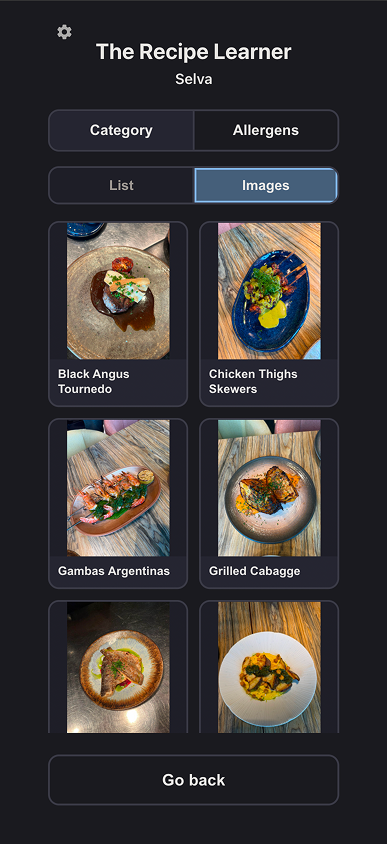
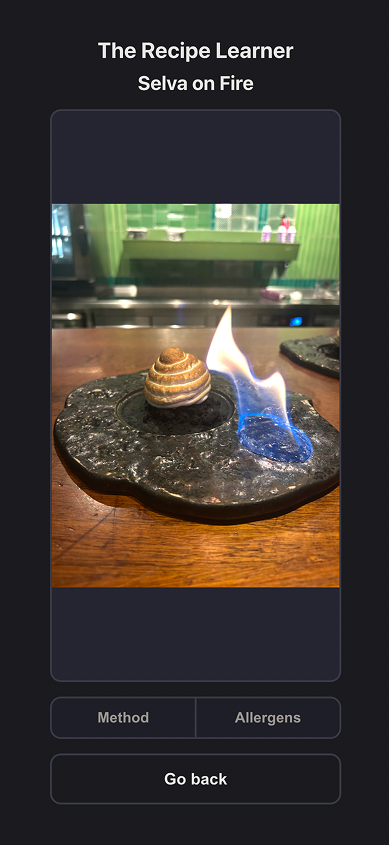
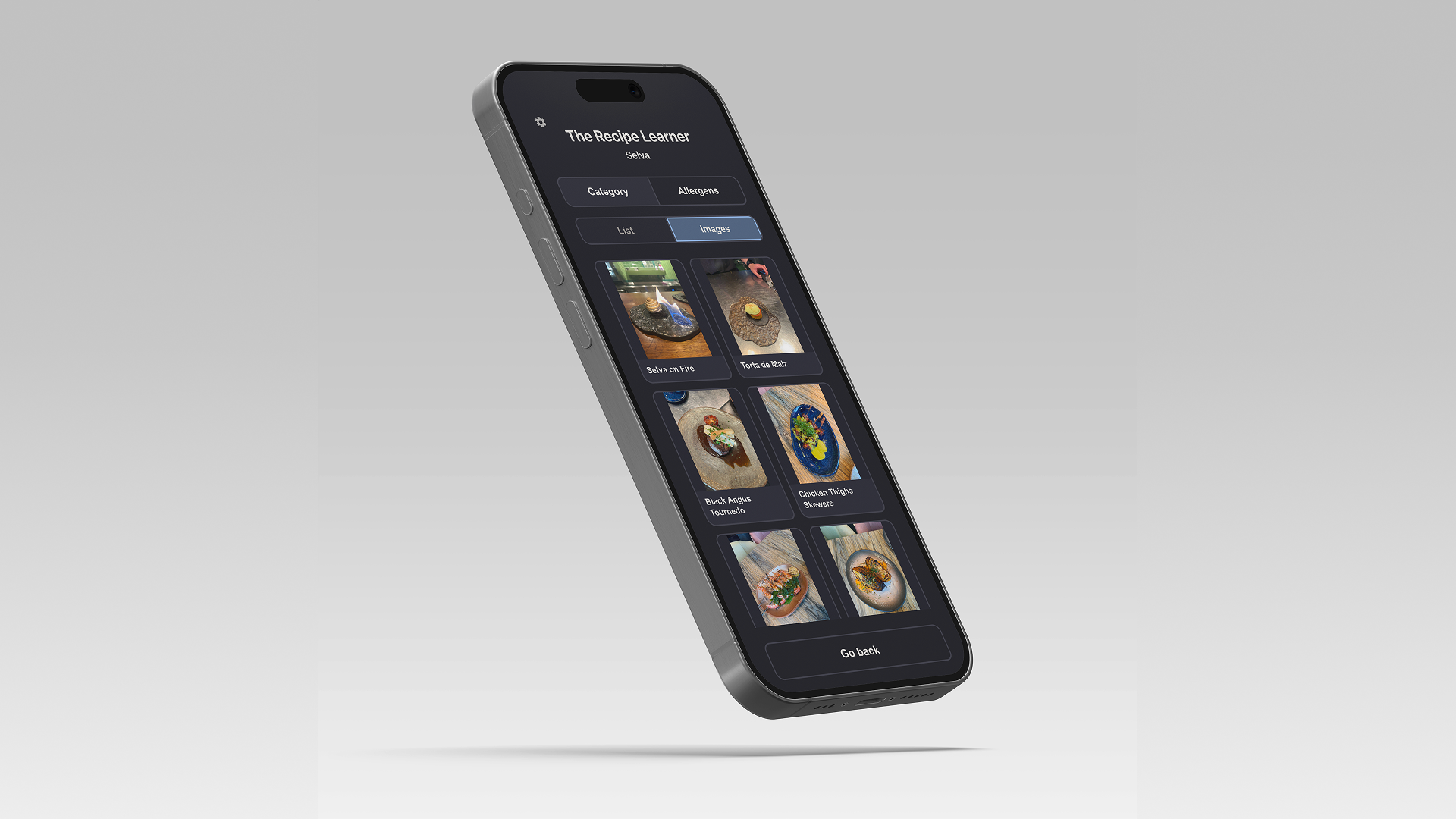
When I introduced the concept to the restaurant team, they were interested in the idea but preferred a more visual approach to learning. Rather than forcing the same method on every outlet, I adapted the experience. The restaurant's version uses a flashcard-style interaction, with a photo of a dish on one side and its ingredients on the other. This allowed employees to connect the appearance of a dish with its composition, making the learning experience more intuitive for their needs. These two approaches became the foundation for a flexible learning platform that could accommodate different types of recipes and ways of learning.
Beyond hospitality
Although The Recipe Learner started as a tool for a hotel, the underlying concept is not limited to hospitality. At its core, it is about turning information that people need to memorise into an interactive learning experience. The same approach could be used for product training in retail, helping employees learn product features and specifications; onboarding in companies, where new team members need to familiarise themselves with processes and internal knowledge; or education, where students can practise recalling terminology, concepts, and facts. The project showed me how a solution inspired by a very specific personal experience could become a platform with applications far beyond its original context.